Web3 vs Web2 Trends: Internet Buzz
WTF is the Difference between Web2 and Web3 : The Internet Most Asked Questions
I create clean, appealing, functional interfaces and reusable components that adhere to the most recent standards.
Currently , I'm fascinated by/with the Web3 space and it's potential for even smarter and trustless society. I am looking forward to join Team's focused on building this next frontier of web.
Hello Internet Wanderer !!!
You might have been surfing around the internet looking for one cool stuff or the other and then boom!!!,
Web3 vs Web2 Trends are everywhere on the internet.
In this article, I will try as much as I could to make you understand the versions of the web from its creation to the latter.
Before We dive deep into this article, I did like to thank the Sponsors of this post, Blockgames Zuri-team Nestcoin for the opportunity to put forth this content.
WTF is Web3?
For us to make any sense of what we mean by “Web 3.0”, we need to rewind to Web 1.0 and start there.

Web 1.0, in short, was the first “phase” of the web.
Earlier, there were only a few content creators in Web 1.0. During this phase, web pages were static where the content was served from the server’s file system. Moreover, there was no interactivity on these pages. You couldn’t “react” to posts with comments or likes. Instead, you just passively consumed information.
In a Nutshell, Web 1.0 is called the Read-Only Web or Information Web(Information Economy).
Web 2.0
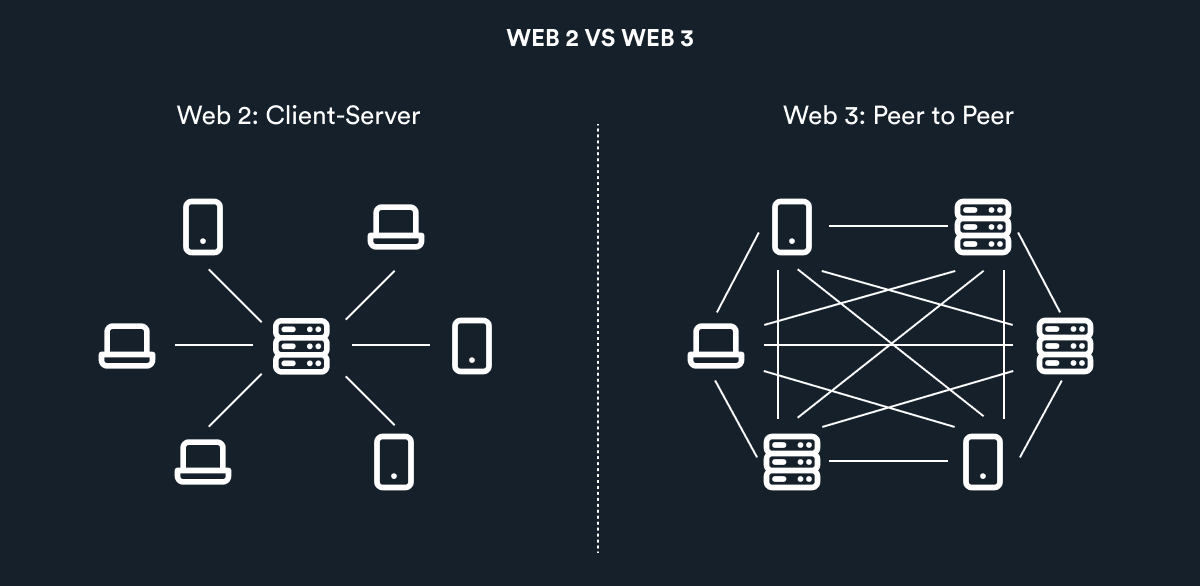
Web2 refers to the version of the internet most of us know today. An internet dominated by companies that provide services in exchange for your personal data. Web3, in the context of Ethereum, refers to decentralized apps that run on the blockchain.
samajammin
Instead of static content, the web became a place for dynamic content, one where users are now able to interact with content published on the web. This user interaction became possible because of the invention of technologies like JavaScript, HTML, and CSS, which allowed developers to build apps where users can interact with content in real-time.
Be it social media, blogging — Web 2.0 is completely interaction-based. We engage through texts and comments, and we can easily attach and share content like images and music with other people. This era of the web was called The Read-Write Web or Social Web(The Platform Economy).
Emerging Problems With Web2
Quietly — almost imperceptibly(subtle) — an interesting dilemma arose. When creating this read-write web, a non-trivial question skirted underneath the covers. Who owns all this data?
An interesting plot line emerges. While using many amazing, world-changing software products, users quietly lost control of their data. To illustrate: Facebook owns much of the data on your social graph. Even if you are frustrated with Facebook (for any reason), you can’t quit without giving up that data. There is no way to ‘export’, or otherwise ‘exit’. Ownership is tied to the platform. Vivek Singh.
The Rise of Web 3.0
We are well aware of the growing worry about the privacy of all of the data created by individuals on the internet, particularly in this Web2 age. Big tech corporations (as well as small tech companies) have complete control over how consumers' data is gathered, kept, and used. Web3 on the other hand is a Decentralised Web, which gives consumers(users) complete ownership over their data. This era of the web is called The Read-Right-Own Web(Ownership Economy).

Since Web3 emerged in 2014 as a term to describe the new types of protocols that enable decentralized consensus, it has now come to describe an entire ecosystem of public blockchains, applications, and even design philosophies.
What do we want Web 3 to do?
Here’s some rapid fire of what the hope is for the future of the web.
Data to users: Information is owned by the users, and provided to corporations, businesses, or services who hope to benefit the user.
Censorship resistance: No government, company, or institution should control your access to information.
Align users and platforms: Create ‘crypto networks’ where users and platforms creators have symbiotic, instead of competitive, relationships.
Global interactivity: The ability to transact value, information, or assets, large or small, with anyone with internet, anywhere, for a low cost.
Self-sovereign identity: Giving you the ability to own, see, and understand your entire digital identity
What Future Will this Create?
The belief is that web3 is a chance to build a secured, trustless, better and fairer system
Conclusion
Same way cryptocurrency, a product of blockchain, has been a revolutionary force in tech, Web3 hinges on that prospect by overcoming one of the fears of users by putting more control into their hands. For me, it has come to stay and although not everyone may adopt this “upgrade”, it is safe to say there’s a lot to achieve through Web3 and we are yet to scratch the surface.
Further Reading:
Did the web just got an Upgrade?
